
Bridges in Phoenix
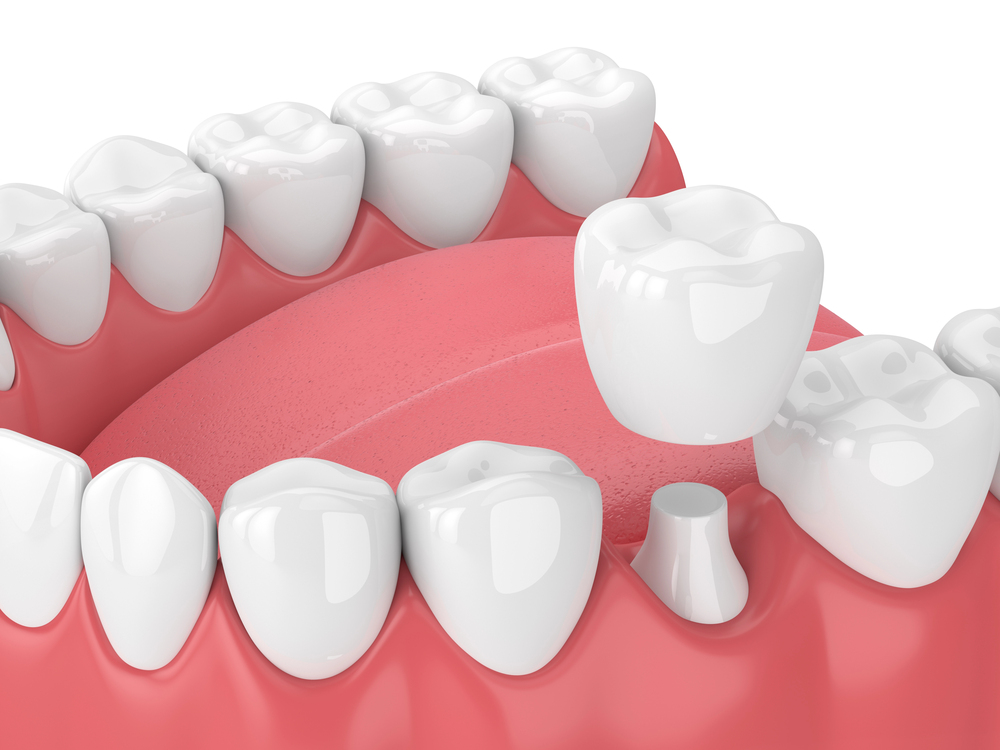
Maybe it started with a cracked molar that couldn't be saved, or a front tooth lost years ago that you've learned to hide when you smile. Many of our Phoenix patients come to us after living with a gap for months, noticing that chewing feels uneven or that nearby teeth seem to be shifting. When one or more teeth are missing in a row, a dental bridge is one of the most established ways to fill that space. At Anytime Dental – Phoenix, we place bridges as part of our restorative care, with appointment times built around real Phoenix schedules.
A dental bridge is a fixed restoration that "bridges" the space left by a missing tooth. It typically includes one or more artificial teeth, called pontics, held in place by crowns on the healthy teeth on either side of the gap. Those supporting teeth are known as abutments. Because the bridge is cemented in place, it stays put. You don't take it out at night the way you would a removable partial denture.
Bridges fit a range of situations. A patient might be missing a single back tooth after an extraction, a front tooth lost to an injury, or two neighboring teeth in the same area. Our dentists, Dr. Ermias Mehretab, Dr. Zachary Coleman, and Dr. Andrew Kassman, look at where the gap is, how strong the surrounding teeth are, and what you want from your smile before recommending a bridge.
Your first visit begins with a dental exam, where we check the health of the teeth that would support the bridge, along with your gums and bite. Healthy abutment teeth matter, since they carry the load of the replacement tooth. If a neighboring tooth needs attention first, such as a filling or root canal therapy, we can often handle that here because we offer those treatments in our office.
A bridge isn't the only path, and we'll walk you through the other options we provide. Depending on your situation, those can include dental implants, partial dentures, or implant-supported dentures. Some patients prefer a bridge because it doesn't involve implant surgery. Others choose an implant to avoid reshaping the neighboring teeth. Our goal is to help you understand the tradeoffs so you can decide with confidence.
What happens during bridge treatment?
Bridge treatment usually takes two main visits. At the first appointment, we numb the area with local anesthesia and gently reshape the abutment teeth so the crowns can fit over them. We then take impressions so your bridge can be made to match your bite and the shade of your natural teeth. Before you leave, we place a temporary bridge to protect the prepared teeth.
At the second visit, we remove the temporary, check the fit and color of your permanent bridge, and make any needed adjustments before cementing it in place. Here's what most patients can expect along the way:
- A thorough exam and a conversation about your options
- Comfortable preparation of the supporting teeth with local anesthesia
- A temporary bridge to wear between visits
- Fitting, bite checks, and final placement of your custom bridge
If dental visits make you anxious, we can help. Our office offers nitrous oxide and IV sedation for patients with dental anxiety, so you can talk with us about which option suits your needs.
How do I care for my bridge?
You care for a bridge much like your natural teeth, with one extra step: cleaning underneath the pontic. Food and plaque can collect in the space between the artificial tooth and your gums. A floss threader or similar tool helps you reach that area, and we're happy to show you the technique at your appointment.
Regular checkups and dental cleanings with our hygienist are just as important. The abutment teeth still need protection from decay and gum disease, since the bridge depends on them. During routine visits, we check the bridge, the cement margins, and the surrounding gums. If anything ever feels loose or uncomfortable, we offer emergency dental appointments so you can be seen promptly.
How can I pay for a dental bridge?
We accept most dental insurance plans, and our team can help you understand how your coverage may apply to a bridge. We also welcome self-pay patients who don't have dental insurance.
For patients who prefer to spread out the cost, we offer financing through Sunbit and CareCredit. And because we offer early morning, late evening, and weekend appointments, Phoenix patients can fit bridge treatment around work, school, and family without taking extra time away. If a gap in your smile has been bothering you, we'd be glad to help you explore whether a bridge is right for you.